Sayab-rule

Sayab-rule
To understand the underlying principles of self-organisation and computation in cellular automata it would be helpfull to find the simplest form of the essential ingredients, glider- guns and eaters, because then the dynamics would be easier to interpret. Such minimal components emerge
spontaneously in the newly discovered Sayab-rule, a binary 2D cellular automaton with a Moore neighborhood and isotropic dynamics. The Sayab-rule has the smallest glider-gun reported to date, consisting of just four live cells at its minimal phases. We show that the Sayab-rule can imple-
ment complex dynamical interactions and the gates required for logical universality.
José Manuel Gómez Soto and Andrew Wuensche,
“Minimal Glider-Gun in a 2D Cellular Automata”, Complex Systems, Volume 27, Issue 1, ISSN: 0891-2513, (2018).
Arxiv: PDF
Precursor-rule in the Forum of www.conwaylife.com
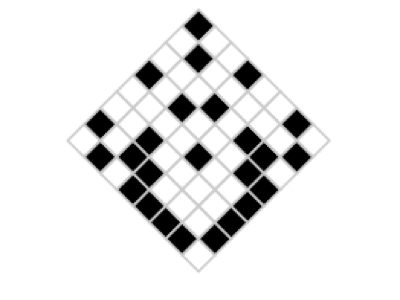
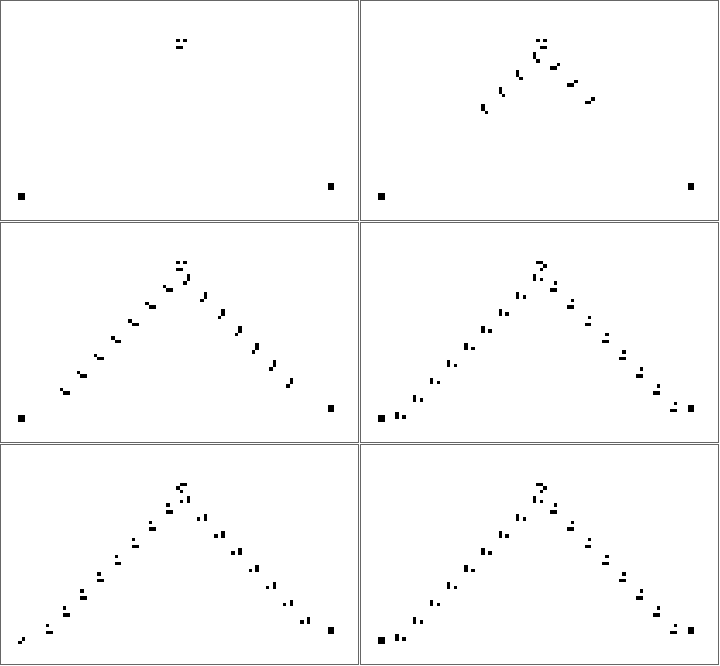
Glider-gun “a”
Glider-Gun in action shooting two diagonal glider streams with a frequency of 20 time-steps and glider spacing of 5 cells. Each glider streams is stopped by an eater. Because the system is isotrpic, any orientation of the glider-gun is equally valid. Green dynamic trail are set to 10 time-steps.
Emerging Glider-gun “a”

Collisions between two gliders create a glider-gun.

Gate NOT
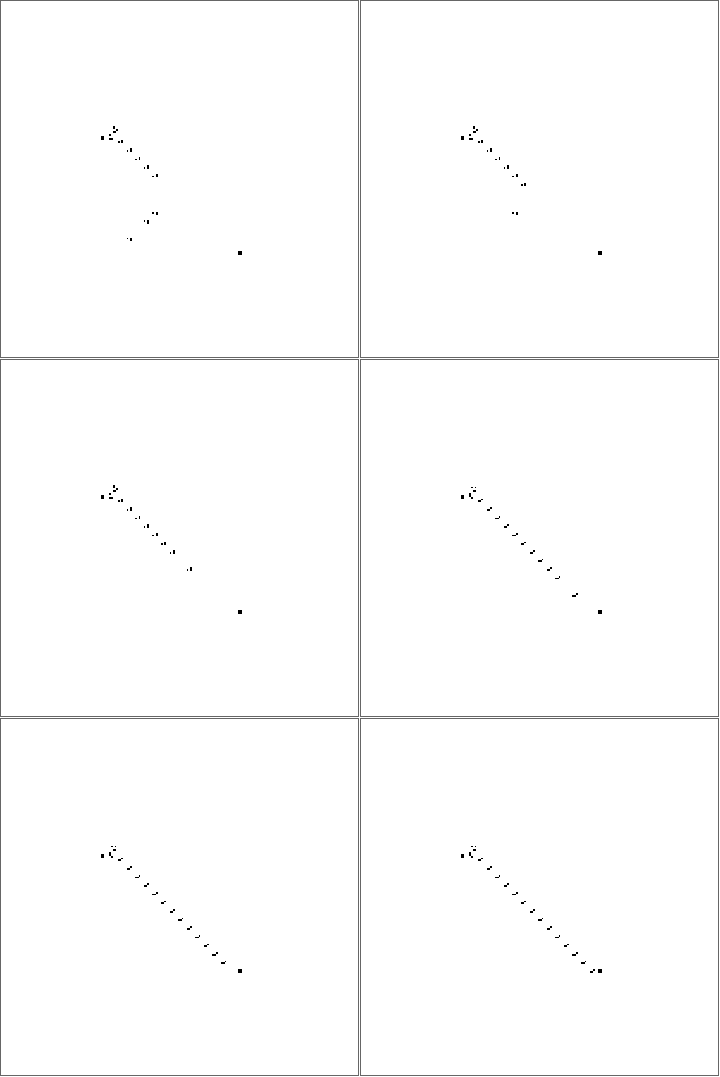
An example of the NOT gate or inverter, which
transforms a stream of data to its compliment, represented by gliders and gaps. The 5-bit input string A (11001) moving SE interacts with a GG1 glider-stream moving NE, resulting in NOT-A (00110) moving NE, shown after 100 time-steps.
Emerging Glider-gun “a”
Collisions between a glider-gun vs oscillator gliders a glider-gun.
Gate AND
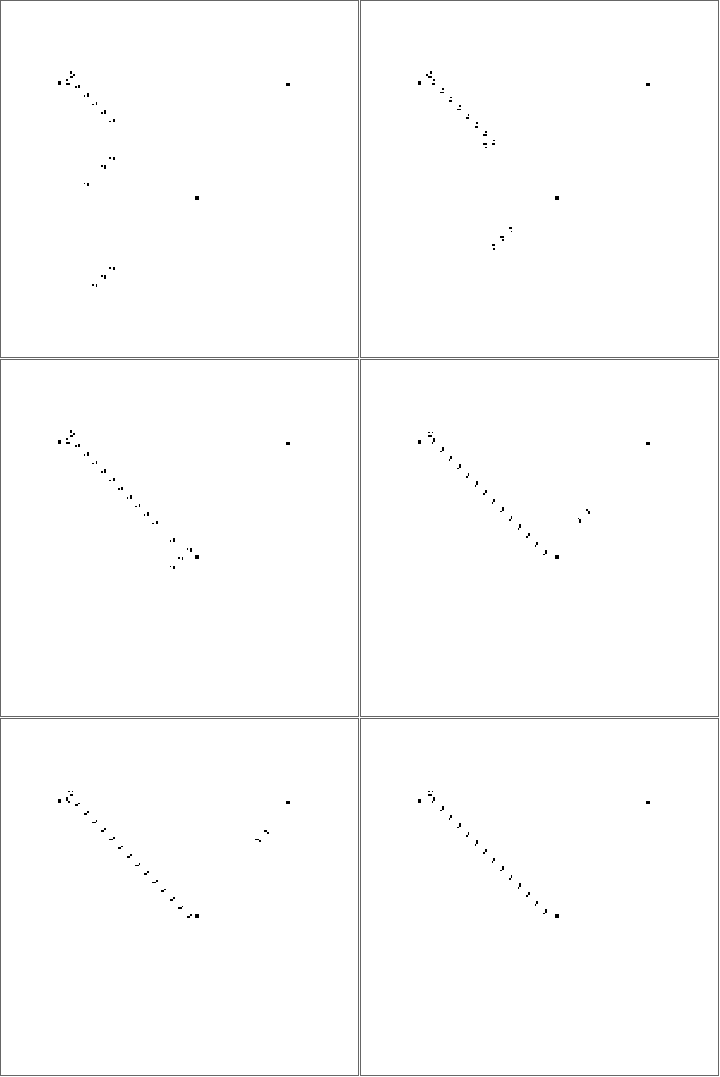
An example of the AND gate making a conjunction between two streams of data, represented by gliders and gaps. The 4-bit input strings A (1101) and B (1110) both moving SE interact with a glider-gun glider-stream moving NE, resulting in A-AND-B (1100) moving SE shown after
173 time-steps.
Gate OR
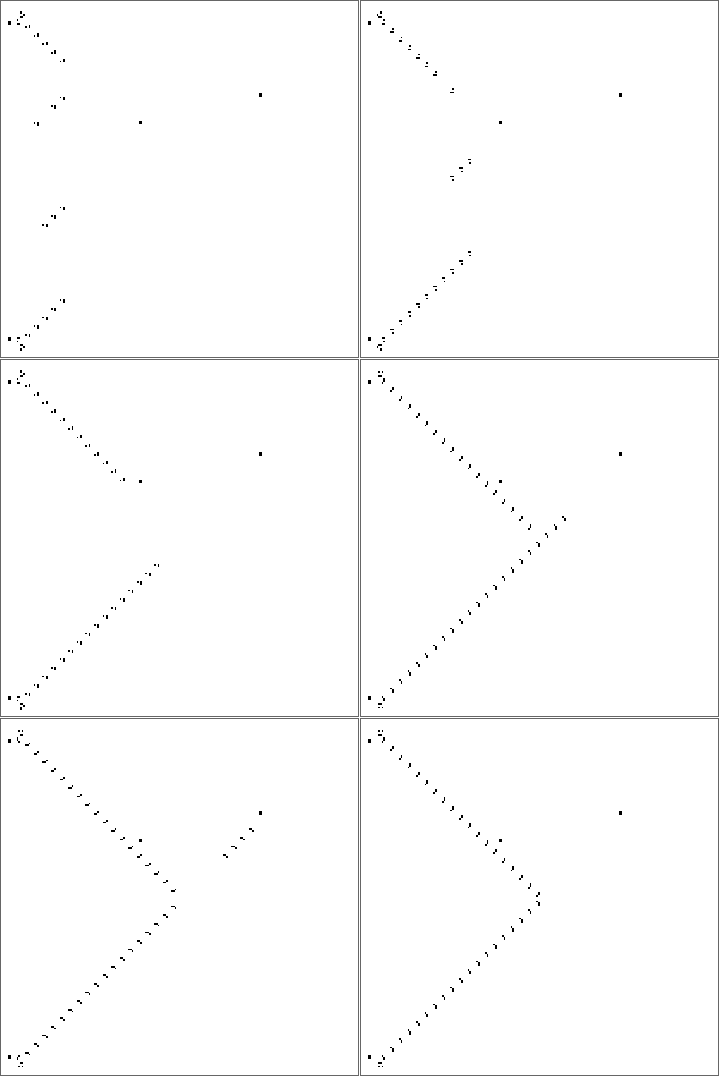
An example of the OR gate which makes a disjuntion between two stream of data represented by two streams of gliders and gaps. The 5-bit input strings A (1101) and B (1110) both moving SE interact with two GG1 glider-streams, the lower GG1 shooting NE, and subsequently with an upper GG1 shooting SE, finally resulting in the A-OR-B string (1111) moving SE shown after 333 time-steps.